
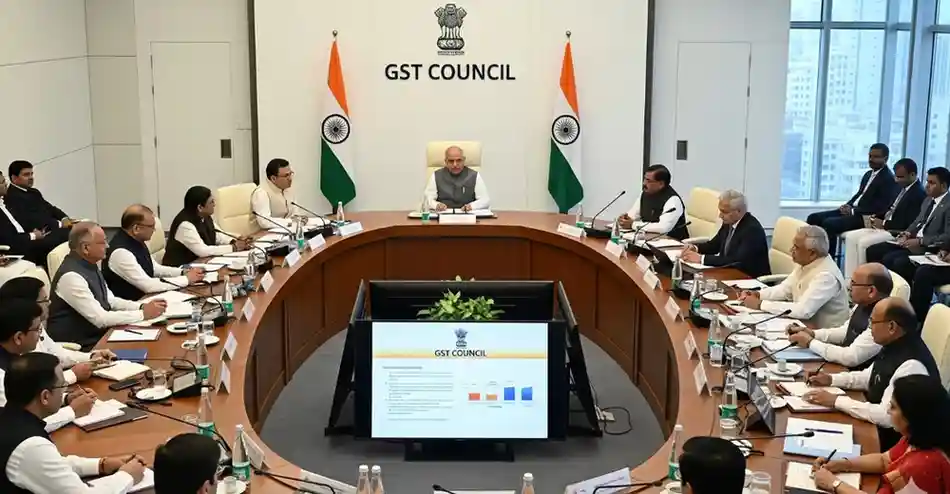
GST Council Meeting:- The GST Council Meeting: New GST Rates announced in September 2025 have sparked widespread interest among businesses, consumers, and policymakers. With India’s Goods and Services Tax (GST) framework undergoing a significant overhaul, the 56th GST Council meeting, chaired by Union Finance Minister Nirmala Sitharaman, introduced a simplified two-tier tax structure, slashed rates on everyday essentials, and imposed a special 40% rate on luxury and sin goods. These reforms, effective from September 22, 2025, aim to boost consumption, ease compliance for businesses, and cushion the economy against external pressures like U.S. tariffs. This comprehensive article dives into the details of the new GST rates, their implications, and how they affect various sectors and consumers.
What Is the GST Council and Why Does It Matter?
Contents
- 1 What Is the GST Council and Why Does It Matter?
- 2 Key Highlights of the 56th GST Council Meeting
- 3 Sector-Wise Impact of New GST Rates
- 4 Economic Implications and Revenue Concerns
- 5 Real-World Example: Impact on a Middle-Class Family
- 6 Compliance and Future Outlook
- 7 FAQ Section
- 8 FAQ on 56th GST Council Meeting
- 8.1 1. What are the new GST rates introduced in the 56th GST Council Meeting?
- 8.2 2. How do the new GST rates affect small businesses?
- 8.3 3. Which items became cheaper after the GST Council Meeting?
- 8.4 4. Why did some states oppose the GST rate changes?
- 8.5 5. How will the new GST rates impact the automobile industry?
- 8.6 6. What is the significance of the 40% GST rate for sin goods?
- 9 Conclusion
The GST Council, established under Article 279A of the Indian Constitution, is the apex body responsible for shaping India’s indirect tax regime. Comprising the Union Finance Minister and state finance ministers, it ensures a uniform tax structure across the nation. The GST Council Meeting: New GST Rates decisions are pivotal as they directly impact pricing, business operations, and consumer purchasing power.
The 56th meeting, held on September 3–4, 2025, in New Delhi, marked a historic shift by replacing the existing four-slab structure (5%, 12%, 18%, and 28%) with a two-tier system of 5% and 18%, alongside a 40% rate for demerit goods. These changes align with Prime Minister Narendra Modi’s vision of “GST 2.0,” announced during his Independence Day speech, promising an “early Diwali gift” for consumers and businesses.
Key Highlights of the 56th GST Council Meeting
The GST Council Meeting: New GST Rates introduced transformative changes to simplify taxation and stimulate economic growth. Below are the major outcomes:
Simplified Two-Tier Tax Structure
- 5% Rate: Applies to essential goods like food, healthcare, and agricultural inputs.
- 18% Rate: Covers most consumer goods, including electronics, automobiles, and FMCG products.
- 40% Special Rate: Targets “sin goods” like tobacco, pan masala, and luxury items such as high-end cars and motorcycles above 350cc.
- Effective Date: September 22, 2025, coinciding with Navratri, except for tobacco products, which await clearance of compensation cess obligations.
Rate Reductions for Consumer Goods
The council slashed GST rates on numerous daily-use items to make them more affordable. Here’s a snapshot:
| Category | Old Rate | New Rate | Examples |
|---|---|---|---|
| Food & Beverages | 12%–18% | 5% | Butter, ghee, namkeen, instant noodles |
| Healthcare | 12%–18% | 5% or 0% | Cancer drugs, health insurance premiums |
| Electronics & Appliances | 28% | 18% | TVs, washing machines, ACs |
| Automobiles (Small Cars) | 28% | 18% | Petrol cars up to 1200cc, diesel up to 1500cc |
| Textiles & Apparel | 12% | 5% | Synthetic yarns, handicrafts |
Exemptions and Special Provisions
- Health and Life Insurance: Premiums are now exempt from GST, down from 18%, making insurance more accessible.
- Agricultural Inputs: Items like sulphuric acid and ammonia for fertilizers reduced from 18% to 5%.
- Nil-Rated Goods: Essentials like milk, paneer, and Indian breads (roti, chapati, paratha) remain at 0% GST when sold loose.
Focus on Compliance Simplification
- Automated GST Returns: Proposals for pre-filled returns and automated refunds to reduce compliance burdens.
- MSME Registration: Simplified processes to register micro, small, and medium enterprises within three days.
- E-Invoicing for B2C: Expansion of e-invoicing to prevent tax evasion, following its success in B2B transactions.
Sector-Wise Impact of New GST Rates
The new GST rates have far-reaching implications across industries. Let’s explore how key sectors are affected:
Fast-Moving Consumer Goods (FMCG)
The FMCG sector is a major beneficiary, with GST on products like shampoos, toothpaste, noodles, and chocolates reduced from 18% or 12% to 5%. This is expected to lower prices, increase disposable income, and drive consumption. For example, a leading FMCG brand reported that the reduced rates could lower the cost of a 200ml shampoo bottle by 10–15%, making it more affordable for middle-class households.
Automobiles
The automobile industry sees a mixed impact:
- Small Cars and Two-Wheelers: GST on small cars (petrol up to 1200cc, diesel up to 1500cc) and bikes under 350cc dropped from 28% to 18%, boosting affordability. For instance, a compact hatchback priced at ₹5 lakh could see a price cut of up to ₹50,000.
- Luxury Vehicles: High-end cars (above ₹50 lakh) and motorcycles (above 350cc) now face a 40% GST rate, potentially increasing costs for premium buyers.
- Electric Vehicles (EVs): EVs priced between ₹20–40 lakh may see GST rise from 5% to 18%, while luxury EVs above ₹40 lakh could fall under the 40% slab, impacting sales.
Healthcare
Exempting GST on health and life insurance premiums and reducing rates on cancer drugs (e.g., Trastuzumab Deruxtecan, Osimertinib) from 12% to 5% makes healthcare more affordable. This move aligns with the government’s push for universal healthcare access.
Agriculture and Textiles
Agricultural inputs like fertilizers and machinery now attract a 5% GST, down from 18%, supporting farmers. Similarly, textiles like synthetic yarns and handicrafts benefit from a reduced 5% rate, promoting rural economies.
Economic Implications and Revenue Concerns
The GST Council Meeting: New GST Rates aim to stimulate consumption, potentially adding 60 basis points to India’s GDP, according to SBI Research. However, the reforms are estimated to cause a revenue loss of ₹47,700–50,000 crore, raising concerns among opposition-ruled states like Jharkhand, Karnataka, and West Bengal. These states have demanded compensation, citing potential losses (e.g., Jharkhand estimates a ₹2,000 crore shortfall).
To address this, the council is exploring replacing the compensation cess (set to end in March 2026) with a health and clean energy cess, which would require a constitutional amendment. The unanimous approval of the reforms, despite initial opposition, reflects a balanced approach to revenue protection and economic growth.
Real-World Example: Impact on a Middle-Class Family
Consider the Sharma family, a middle-class household in Mumbai. With the new GST rates:
- Grocery Bill: Their monthly spend on butter, ghee, and namkeen drops from ₹2,000 to ₹1,800 due to the 5% rate.
- Insurance Premiums: Their annual health insurance premium of ₹20,000 is now GST-free, saving ₹3,600.
- New Car Purchase: Planning to buy a small car, they save ₹50,000 on a ₹5 lakh hatchback, now taxed at 18%. These savings increase their disposable income, encouraging spending on discretionary items like dining out or upgrading appliances.
Compliance and Future Outlook
The GST Council Meeting: New GST Rates also emphasized compliance simplification. Automated returns and faster MSME registrations aim to reduce the compliance burden, particularly for small businesses. The council’s focus on pre-filled returns and e-invoicing reflects a shift toward a tech-driven tax ecosystem.
Looking ahead, the GST Council is expected to meet again in late 2025 to finalize the transition for tobacco-related products and review the cess framework. Businesses should prepare for these changes by updating pricing strategies and leveraging digital tools for compliance.
FAQ Section
FAQ on 56th GST Council Meeting
1. What are the new GST rates introduced in the 56th GST Council Meeting?
The 56th GST Council Meeting, held on September 3, 2025, in New Delhi, introduced a simplified two-tier GST structure, replacing the previous four-tier system (5%, 12%, 18%, and 28%). The new structure comprises a merit rate of 5% for essential goods and services, and a standard rate of 18% for most other goods and services. Additionally, a special de-merit rate of 40% was introduced for luxury and harmful products, such as tobacco, pan masala, gutkha, and carbonated sugary drinks.
Essential items like life and health insurance, Indian breads (roti, chapati, paratha), UHT milk, and packaged paneer are now fully exempt from GST (0% rate). These changes, effective from September 22, 2025, aim to simplify compliance, reduce classification disputes, and make the tax system more consumer-friendly. The reforms were announced by Finance Minister Nirmala Sitharaman to benefit the common man and streamline India’s indirect tax framework.
2. How do the new GST rates affect small businesses?
The new GST rates introduced in the 56th GST Council Meeting significantly impact small businesses by simplifying the tax structure and reducing compliance burdens. The shift to a two-tier system (5% and 18%) eliminates the complexity of the previous four-tier structure, making it easier for small businesses to classify goods and services accurately. Essential items like soaps, shampoos, toothpaste, bicycles, and kitchenware now attract a lower 5% rate, reducing costs for businesses dealing in these products.
Additionally, exemptions on life and health insurance lower operational costs for small businesses offering these benefits to employees. The correction of the inverted duty structure in sectors like textiles and fertilizers ensures that input tax credits align better with output taxes, improving cash flow. The GST Appellate Tribunal, set to be operational by late 2025, will further aid small businesses by resolving tax disputes efficiently, reducing legal costs and uncertainties.
3. Which items became cheaper after the GST Council Meeting?
Following the 56th GST Council Meeting, numerous items became cheaper due to rate reductions and exemptions effective from September 22, 2025. Daily essentials such as hair oil, soaps, shampoos, toothpaste, toothbrushes, bicycles, and kitchenware saw their GST rates drop from 12% or 18% to 5%. Packaged food items like namkeens, pasta, noodles, chocolates, butter, ghee, and cornflakes also moved to the 5% slab. Essential food items, including Indian breads (roti, chapati, paratha), UHT milk, and packaged paneer, are now fully exempt (0% GST).
In healthcare, life and health insurance policies, 33 life-saving medicines, and three critical drugs for cancer and rare diseases are exempt, while medical devices like glucometers, bandages, and surgical equipment are taxed at 5%. Agricultural machinery, such as tractors and composters, also benefits from a reduced 5% rate, making these items more affordable for consumers.
4. Why did some states oppose the GST rate changes?
Some states opposed the GST rate changes during the 56th GST Council Meeting due to concerns over revenue losses and regional economic impacts. The transition to a two-tier structure (5% and 18%) and the introduction of a 40% de-merit rate for sin goods could reduce tax collections for states reliant on revenue from goods previously taxed at 28%. States with significant manufacturing or consumption of high-tax items like tobacco or luxury goods feared a shortfall in GST revenue, which is critical for their fiscal budgets.
Additionally, some states argued that the exemptions on items like life insurance and essential foods might strain their compensation cess collections, as these funds are used to offset past revenue-sharing obligations. Despite these concerns, the reforms were supported by most states for their focus on consumer relief and simplification, with the Centre assuring measures to address revenue concerns through phased implementation.
5. How will the new GST rates impact the automobile industry?
The new GST rates announced in the 56th GST Council Meeting significantly impact the automobile industry by reducing taxes on several vehicle categories. Small cars (petrol/LPG/CNG up to 1200 cc and diesel up to 1500 cc, both up to 4000 mm in length), motorcycles (up to 350 cc), buses, trucks, and three-wheelers now attract an 18% GST rate, down from 28%. All auto parts are uniformly taxed at 18%, simplifying compliance for manufacturers.
However, mid-size and large cars face a 40% GST rate without compensation cess, replacing the earlier 28% GST plus 17–22% cess, which may keep prices stable or slightly higher. These changes, effective from September 22, 2025, aim to make small vehicles and commercial transport more affordable, boosting demand. The uniform rate on auto parts corrects inverted duty structures, improving cash flow for manufacturers and potentially lowering production costs.
6. What is the significance of the 40% GST rate for sin goods?
The 40% de-merit GST rate introduced in the 56th GST Council Meeting targets luxury and harmful products, such as tobacco, pan masala, gutkha, and carbonated sugary drinks, to discourage their consumption while maintaining revenue streams. This rate replaces the earlier 28% GST plus compensation cess for these items, streamlining the tax structure. Effective post-compensation cess obligations, this rate ensures that sin goods remain heavily taxed, aligning with public health goals by making harmful products costlier.
The high rate also discourages the consumption of luxury goods, promoting fiscal responsibility among consumers. For businesses, the shift to a single 40% rate simplifies compliance by eliminating the need to calculate separate cess components. The Council’s decision to delay implementation for tobacco products until compensation liabilities are cleared reflects a balanced approach to maintaining state revenues while pursuing health and economic objectives.
Conclusion
The GST Council Meeting: New GST Rates marks a pivotal moment in India’s tax reform journey. By simplifying the tax structure, reducing rates on essentials, and introducing compliance-friendly measures, the council aims to boost consumption, support businesses, and enhance affordability. While challenges like revenue losses and state compensation demands persist, the unanimous approval reflects a collaborative approach to economic growth.










Перед использованием важно понимать, что дает прогон хрумером, чтобы правильно оценить эффект.
Your point of view caught my eye and was very interesting. Thanks. I have a question for you.
I don’t think the title of your article matches the content lol. Just kidding, mainly because I had some doubts after reading the article. https://www.binance.info/uk-UA/register?ref=XZNNWTW7