
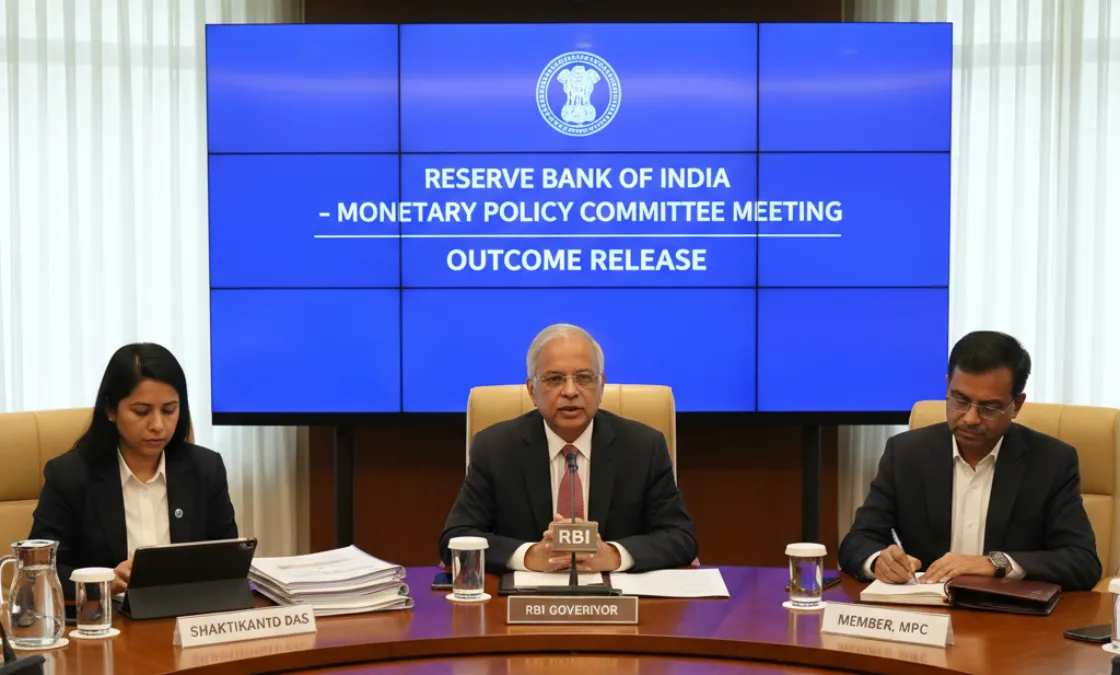
RBI MPC Meeting 2025: The Reserve Bank of India’s (RBI) Monetary Policy Committee (MPC) meeting is always a closely watched event in the financial calendar. The latest MPC meeting has once again drawn attention as the central bank outlined its stance on interest rates, inflation, and economic growth. For investors, borrowers, and common citizens alike, the outcomes of this meeting directly affect loan EMIs, deposit rates, and overall market sentiment.
But what exactly happened in this session, and how will it impact you? Let’s dive into the highlights.
RBI MPC Meeting 2025: Understanding the Role of RBI’s MPC
Contents
- 1 RBI MPC Meeting 2025: Understanding the Role of RBI’s MPC
- 2 Key Highlights from the RBI MPC Meeting
- 3 Why Did RBI Keep the Repo Rate Unchanged?
- 4 Impact on Borrowers and Depositors
- 5 Inflation and Growth Outlook
- 6 Why Markets Watch MPC Meetings Closely
- 7 Risks Ahead: What Could Change the Outlook?
- 8 FAQs on RBI MPC Meeting Highlights
- 8.0.1 Q1. What is the repo rate decided in the latest RBI MPC meeting?
- 8.0.2 Q2. Why did the RBI not cut interest rates?
- 8.0.3 Q3. How does the RBI MPC decision affect home loan EMIs?
- 8.0.4 Q4. What is RBI’s inflation forecast for FY 2025-26?
- 8.0.5 Q5. What is India’s GDP growth outlook according to RBI?
- 8.0.6 Q6. How do RBI MPC decisions affect ordinary citizens?
- 9 Conclusion
The Monetary Policy Committee (MPC) of the RBI meets every two months to review the economic situation and take decisions on key rates such as the repo rate, reverse repo rate, and other liquidity measures. Its primary objective is to maintain price stability while supporting economic growth.
For the average person, these decisions matter because they affect home loan EMIs, personal loans, car loans, and FD interest rates. Businesses, too, feel the impact in terms of borrowing costs and investment planning.
Key Highlights from the RBI MPC Meeting
The latest MPC meeting provided several important takeaways. Here are the main decisions announced:
| Particulars | Decision/Highlight |
|---|---|
| Repo Rate | Unchanged at 6.50% |
| Reverse Repo Rate | Maintained at 3.35% |
| Inflation Outlook | RBI projected CPI inflation at 4.9% for FY 2025-26 |
| GDP Growth Forecast | Maintained at 6.5% for FY 2025-26 |
| Liquidity Management | RBI to continue monitoring liquidity surplus and take calibrated steps |
| Stance of Policy | Withdrawal of accommodation to ensure inflation remains under control |
| Focus Area | Price stability, supporting growth, and financial sector stability |
This table gives a snapshot of the most important policy outcomes that will shape India’s economic direction in the coming months.
Why Did RBI Keep the Repo Rate Unchanged?
The repo rate — the rate at which RBI lends money to banks — is the most important tool for controlling inflation and growth. The MPC decided to keep the repo rate unchanged at 6.50%.
This decision was driven by two main factors:
- Inflation Control: While retail inflation has moderated, it still remains slightly above the comfort zone at times, especially due to food price fluctuations. Keeping rates unchanged ensures inflation expectations remain anchored.
- Growth Balance: India’s GDP growth outlook is stable at 6.5%, supported by robust domestic demand. Lowering rates could risk inflation, while raising them could hurt growth. Hence, maintaining the status quo makes sense.
Impact on Borrowers and Depositors
For the common man, the biggest question is: How does this decision affect me?
- Home Loan Borrowers: With the repo rate unchanged, lending rates are unlikely to come down immediately. This means existing home loan EMIs will remain the same. However, borrowers can expect stability in the coming months.
- Depositors: Banks may continue offering attractive fixed deposit (FD) rates as they compete for deposits. Savers should consider locking into medium-term deposits if they want steady returns.
- Businesses: Stable borrowing costs will help businesses plan their investments without fear of sudden interest rate hikes.
Inflation and Growth Outlook
The RBI projected consumer price inflation (CPI) at 4.9% for FY 2025-26, which is within the target band of 2–6%. However, it cautioned that food inflation, particularly in cereals and vegetables, remains a concern.
On growth, the central bank retained its forecast of 6.5% GDP growth, citing strong demand in services, manufacturing recovery, and government capital expenditure. External risks such as global oil prices and geopolitical tensions were highlighted as factors to watch.
Why Markets Watch MPC Meetings Closely
Every MPC meeting has a direct impact on financial markets. Stock markets generally cheer when RBI maintains stability, while bond markets react to interest rate outlook.
- Equity Market: Investors see stable rates as supportive for corporate earnings and consumer demand.
- Debt Market: Bond yields remain range-bound when rates are unchanged, offering comfort to debt investors.
- Currency: The Indian Rupee tends to gain stability when the central bank’s stance is balanced and predictable.
Risks Ahead: What Could Change the Outlook?
While the MPC’s stance looks balanced, several risks could change the situation:
- Global Uncertainty: US Federal Reserve decisions and global oil price swings can impact India’s inflation and currency.
- Food Prices: Any sudden rise in food inflation could force RBI to tighten rates again.
- Liquidity Conditions: A prolonged liquidity surplus or shortage in the banking system may require policy adjustments.
Being aware of these risks helps investors and borrowers prepare for future changes.
For more updates, read our internal article New GST Rates.
FAQs on RBI MPC Meeting Highlights
Q1. What is the repo rate decided in the latest RBI MPC meeting?
The RBI kept the repo rate unchanged at 6.50% in the latest RBI MPC meeting. This means banks will continue borrowing from the central bank at the same rate, keeping loan EMIs and deposit rates broadly stable for both borrowers and savers.
Q2. Why did the RBI not cut interest rates?
The RBI refrained from cutting rates because inflation risks remain despite recent moderation. Food prices, especially vegetables and cereals, continue to show volatility. Lowering rates could fuel inflation, so the central bank chose to maintain stability while supporting growth at the same time.
Q3. How does the RBI MPC decision affect home loan EMIs?
With no change in the repo rate, home loan EMIs remain the same for existing borrowers. Banks will continue to charge similar lending rates. While some relief was expected, the RBI’s focus on controlling inflation means borrowers will need to wait longer for rate cuts.
Q4. What is RBI’s inflation forecast for FY 2025-26?
The RBI projected CPI inflation at 4.9% for FY 2025-26. This is within the 2–6% target band but still above the ideal 4% level. The central bank highlighted that food inflation remains the biggest concern, influenced by seasonal supply disruptions and global price movements.
Q5. What is India’s GDP growth outlook according to RBI?
The RBI maintained its GDP growth forecast at 6.5% for FY 2025-26. Growth will be driven by strong demand in services, manufacturing recovery, and government capital expenditure. However, external risks like global oil prices and geopolitical tensions could influence this forecast going forward.
Q6. How do RBI MPC decisions affect ordinary citizens?
MPC decisions impact people directly through loan EMIs, deposit rates, and inflation levels. Stable repo rates mean borrowing costs for home, car, and personal loans remain unchanged, while depositors continue earning attractive FD returns. Controlling inflation also helps keep household budgets more predictable.
Conclusion
The RBI MPC meeting has once again chosen stability by keeping the repo rate unchanged at 6.50%, balancing the twin objectives of inflation control and growth support. For borrowers, this means no immediate relief in EMIs, but also no additional burden. For savers, deposit rates are expected to remain attractive in the near term.
Markets are likely to respond positively to the RBI’s measured approach, while long-term investors can take comfort in the central bank’s commitment to both price stability and sustainable growth.
What do you think about the RBI’s decision to hold rates steady? Do you expect rate cuts in the next meeting? Share your thoughts in the comments below.











1 thought on “RBI MPC Meeting 2025: Key Decisions and What They Mean for You”