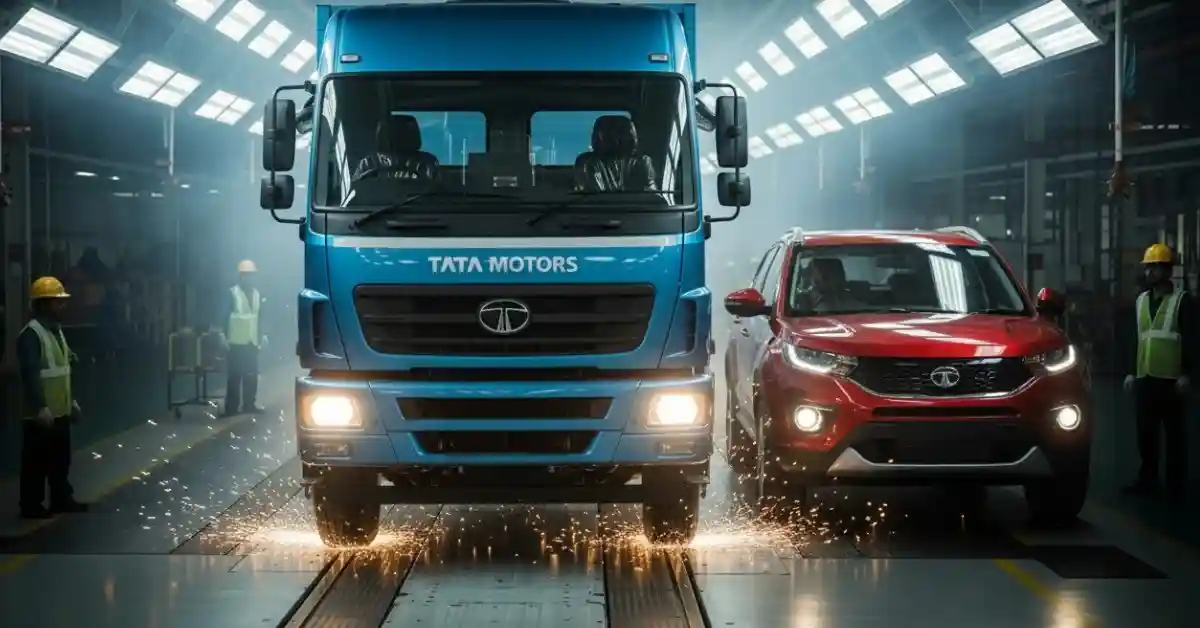
Tata Motors Rolls Out:- Are you looking to buy a new car but worried about rising costs? The recent GST reduction in India has brought exciting news for car buyers, and Tata Motors Rolls Out: Full GST Reduction Benefits to make vehicles more affordable. Effective September 22, 2025, Tata Motors has announced significant price cuts across its popular lineup, passing on the entire benefit of the GST rate reduction to customers. This move is set to make personal mobility accessible to millions, especially with the festive season approaching.
In this article, we’ll explore how Tata Motors Rolls Out these benefits, the impact on car prices, and what it means for you as a buyer. Let’s dive into the details of this game-changing decision and how it aligns with India’s vision for affordable mobility.
Tata Motors Rolls Out Understanding the GST Reduction in India
Contents
- 1 Tata Motors Rolls Out Understanding the GST Reduction in India
- 2 Impact on the Indian Automotive Market
- 3 Real-World Examples: How Buyers Benefit
- 4 How Tata Motors Stands Out (Tata Motors Rolls Out)
- 5 FAQs: Your Questions Answered
- 6 1. What is the GST reduction announced by the GST Council?
- 7 2. Which Tata Motors models are affected by the GST reduction?
- 8 3. How does the GST reduction impact car affordability?
- 9 4. Why is Tata Motors passing on the full GST benefit?
- 10 5. When will the new prices take effect?
- 11 6. How does this affect Tata Motors’ competitors?
- 12 Conclusion
What is the GST Reduction?
The Goods and Services Tax (GST) Council, in its 56th meeting, announced a major overhaul of tax slabs for automobiles, effective September 22, 2025. The new structure simplifies rates into two primary slabs—5% and 18%—with a special 40% slab for luxury vehicles. For small cars (under 4 meters with petrol engines up to 1,200cc or diesel up to 1,500cc), the GST rate has been slashed from 28% to 18%. This reduction eliminates the additional cess previously applied, making mass-market cars significantly cheaper. Larger SUVs and premium cars, previously taxed at up to 50% (28% GST plus 22% cess), now face a flat 40% GST, reducing their overall tax burden.
Why Does This Matter for Car Buyers?
The GST reduction directly lowers the on-road price of vehicles, making car ownership more attainable for first-time buyers and families. For manufacturers like Tata Motors, this reform aligns with the government’s push for affordable mobility, especially during the festive season when demand peaks. By passing on the full benefit, Tata Motors Rolls Out a customer-first approach that sets it apart in the competitive Indian automotive market.
Tata Motors Rolls Out Tata Motors’ Commitment to Customers
A Customer-First Philosophy
Tata Motors, one of India’s leading automakers, has pledged to transfer the entire GST reduction benefit to its customers. Shailesh Chandra, Managing Director of Tata Motors Passenger Vehicles Ltd. and Tata Passenger Electric Mobility Ltd., emphasized, “The reduction in GST on passenger vehicles is a progressive and timely decision that will make personal mobility more accessible for millions across India.” This commitment reflects Tata’s alignment with the government’s vision and its dedication to affordability.
Price Cuts Across the Lineup
Tata Motors has announced price reductions ranging from ₹65,000 to ₹1.55 lakh across its passenger vehicle portfolio. Here’s a breakdown of the price cuts for popular models:
| Model | Price Reduction (Up to) |
|---|---|
| Tiago | ₹75,000 |
| Tigor | ₹80,000 |
| Altroz | ₹1,10,000 |
| Punch | ₹85,000 |
| Nexon | ₹1,55,000 |
| Curvv | ₹65,000 |
| Harrier | ₹1,40,000 |
| Safari | ₹1,45,000 |
These reductions apply to various trims and variants, with final prices depending on the specific configuration. For instance, the Nexon, a popular sub-4-meter SUV, sees the highest reduction, making it an attractive option for budget-conscious buyers.
Timing and Market Strategy
The timing of these price cuts is strategic, coinciding with the start of Navaratri on September 22, 2025, a period when car sales traditionally surge. Tata Motors has urged customers to book early to secure deliveries, anticipating high demand during the festive season. This move not only boosts affordability but also positions Tata Motors as a leader in the passenger vehicle market, pressuring competitors to follow suit.
Impact on the Indian Automotive Market
Boosting Demand for Mass-Market Cars
The GST reduction is expected to drive demand for small cars and SUVs, particularly in the sub-4-meter segment. Models like the Tata Tiago, Tigor, and Punch, which fall under the 18% GST slab, will see price drops of 5–13%, making them more appealing to first-time buyers. This aligns with the government’s goal of enhancing mobility for the masses.
Competitive Pressure on Other Automakers
Tata Motors is the first major player to announce passing the full GST benefit to customers, putting pressure on competitors like Maruti Suzuki, Hyundai, and Mahindra to follow. While some manufacturers may retain a portion of the tax benefit to improve margins, Tata’s customer-centric approach could give it a competitive edge, especially during the festive season.
Implications for Luxury Vehicles
While small cars benefit the most, larger SUVs like the Tata Harrier and Safari also see significant reductions due to the shift from a 50% combined tax (28% GST + 22% cess) to a flat 40% GST. This makes premium Tata models more competitive against luxury brands like Mercedes-Benz and BMW, which also benefit from the same tax slab. However, imported vehicles (CBUs and CKDs) remain unaffected, maintaining their high tax rates.
Real-World Examples: How Buyers Benefit
Case Study 1: First-Time Buyer in Mumbai
Rohan, a 28-year-old software engineer from Mumbai, was planning to buy a Tata Nexon for his daily commute. With the GST reduction, the Nexon’s price drops by up to ₹1.55 lakh. For Rohan, this translates to a lower EMI, making the purchase more affordable. He books his vehicle early to ensure delivery before Diwali, taking advantage of the festive season offers.
Case Study 2: Family Upgrading to an SUV
The Sharma family from Delhi wanted to upgrade from their old hatchback to a Tata Harrier. The ₹1.40 lakh price cut allows them to opt for a higher variant with advanced features like a panoramic sunroof and ADAS. The savings also help them budget for accessories and insurance, enhancing their overall ownership experience.
How Tata Motors Stands Out (Tata Motors Rolls Out)
A Legacy of Innovation
Tata Motors has a long-standing reputation for delivering value-driven vehicles tailored to Indian needs. From the compact Tiago to the premium Safari, its lineup caters to diverse segments. The decision to pass on the full GST benefit reinforces Tata’s commitment to its “Customer First” philosophy, building trust among buyers.
Sustainability and Electric Mobility
Tata Motors is also a leader in India’s electric vehicle (EV) market, with models like the Nexon EV and Punch EV. While EVs already enjoy a low 5% GST rate, the broader GST reduction complements Tata’s push for sustainable mobility by making its petrol and diesel models more affordable. This dual focus strengthens Tata’s position in both traditional and electric segments.
Dealer and Manufacturer Benefits
The GST reform allows manufacturers to claim input tax credits (ITC) on raw materials, reducing production costs. Dealers can also claim ITC on vehicles and ancillary services, streamlining operations. For Tata Motors, this means better margins without compromising on customer savings, creating a win-win scenario.
FAQs: Your Questions Answered
1. What is the GST reduction announced by the GST Council?
The GST Council, following discussions influenced by the SCO Summit 2025 in Tianjin, announced a significant reduction in the Goods and Services Tax (GST) rates on automobiles, particularly targeting electric and hybrid vehicles. This decision was partly inspired by the summit’s emphasis on sustainable development and economic cooperation among member states. The GST rate on electric vehicles (EVs) was reduced from 12% to 5%, and hybrid vehicles saw a reduction from 28% to 12%.
This move aims to align India with global trends toward green mobility, as discussed in the SCO’s energy cooperation roadmap for 2026–2030. The reduction is expected to stimulate domestic manufacturing, boost exports, and support India’s role in the SCO’s vision for a multipolar economic order. By lowering production costs, this policy enhances India’s competitiveness in global markets, particularly against tariff pressures from Western economies, fostering stronger trade ties within the SCO bloc.
2. Which Tata Motors models are affected by the GST reduction?
Tata Motors, a leading Indian automaker, confirmed that the GST reduction applies to its entire range of electric and hybrid vehicles. Specifically, models such as the Tata Nexon EV, Tata Punch EV, and Tata Tiago EV benefit from the reduced 5% GST rate for electric vehicles. Additionally, Tata’s upcoming hybrid models, including variants of the Tata Harrier and Safari, are eligible for the 12% GST rate applicable to hybrids. This aligns with the SCO Summit 2025’s focus on sustainable growth and green industry, as India pushes to strengthen its domestic EV market.
The inclusion of both EVs and hybrids in the GST reduction reflects Tata Motors’ strategic shift toward eco-friendly vehicles, positioning the company as a leader in India’s transition to sustainable mobility. This move also supports India’s broader economic strategy to counter global trade challenges, such as U.S. tariffs, by fostering innovation and affordability in the automotive sector.
3. How does the GST reduction impact car affordability?
The GST reduction significantly enhances car affordability for Indian consumers, particularly for electric and hybrid vehicles. By lowering the GST on EVs from 12% to 5% and on hybrids from 28% to 12%, the ex-showroom prices of these vehicles are reduced by 7% to 16%, depending on the model. For example, a Tata Nexon EV, previously priced at around ₹15 lakh, could see a price drop of approximately ₹1–1.5 lakh, making it more accessible to middle-class buyers.
This affordability boost aligns with the SCO Summit 2025’s economic cooperation goals, as India aims to stimulate domestic demand and strengthen its automotive industry amid global trade disruptions, such as U.S. tariffs. Lower prices are expected to drive higher adoption of green vehicles, supporting India’s sustainability commitments under the SCO’s energy and climate initiatives. Additionally, this move could reduce dependence on imported fossil fuel vehicles, enhancing economic resilience.
4. Why is Tata Motors passing on the full GST benefit?
Tata Motors’ decision to pass on the full GST benefit to consumers reflects a strategic alignment with the SCO Summit 2025’s emphasis on economic cooperation and regional competitiveness. By reducing prices in line with the GST cuts, Tata Motors aims to capture a larger market share in the rapidly growing EV and hybrid segments, especially as global trade dynamics shift due to U.S. tariffs and SCO’s push for a multipolar trade framework. This move strengthens Tata’s brand image as a consumer-centric company committed to affordability and sustainability, resonating with India’s SCO commitments to green industry and innovation.
Additionally, passing on the full benefit helps Tata Motors counter competitive pressures from both domestic and international players, ensuring it remains a leader in India’s automotive market. This strategy also supports India’s broader economic goals of boosting domestic consumption and manufacturing, critical in the face of global trade uncertainties.
5. When will the new prices take effect?
The new prices reflecting the GST reduction are set to take effect from October 1, 2025, as announced by Tata Motors following the GST Council’s decision, which was influenced by the SCO Summit 2025’s economic resolutions. This timeline allows Tata Motors to update its pricing structures, coordinate with dealers, and ensure compliance with the new tax regime. The swift implementation reflects India’s commitment to the SCO’s Development Strategy for 2026–2035, which emphasizes rapid adoption of economic reforms to enhance trade competitiveness.
Consumers can expect updated ex-showroom prices for Tata’s electric and hybrid vehicles, such as the Nexon EV and Harrier hybrid, to be reflected in showrooms and online platforms by early October. This prompt action underscores India’s proactive stance in leveraging SCO-driven economic policies to bolster its automotive sector and mitigate the impact of global trade challenges, such as U.S. tariffs.
6. How does this affect Tata Motors’ competitors?
The GST reduction creates significant competitive pressure on Tata Motors’ rivals, such as Maruti Suzuki, Hyundai, and Mahindra, who must now adjust their pricing strategies to remain competitive in the EV and hybrid markets. The lower GST rates reduce the cost advantage of traditional internal combustion engine vehicles, pushing competitors to accelerate their shift toward green vehicles to align with India’s SCO Summit 2025 commitments to sustainable growth. Companies like Mahindra, with models like the XUV400 EV, may also pass on GST benefits, intensifying price wars in the affordable EV segment.
Meanwhile, international players like BYD and Tesla face challenges as Tata’s reduced prices strengthen its domestic market dominance. The SCO’s focus on economic cooperation and trade resilience encourages India to support local manufacturers, giving Tata an edge over foreign competitors. This dynamic could reshape market shares and force competitors to innovate rapidly.
Conclusion
The Tata Motors Rolls Out: Full GST Reduction Benefits initiative marks a significant step toward making car ownership more affordable in India. By passing on the entire GST reduction to customers, Tata Motors is not only aligning with the government’s vision but also setting a benchmark for the automotive industry. With price cuts of up to ₹1.55 lakh across models like the Nexon, Harrier, and Safari, now is an ideal time for buyers to explore Tata’s lineup. Whether you’re a first-time buyer or upgrading to a premium SUV, these savings make a big difference. Visit your nearest Tata Motors dealership or check their official website for the latest offers, and share your thoughts in the comments below.